I have been a general contractor in Columbus for twenty years, and I have organized more garages than most people have parked cars in. Mine started as plywood and anger. Brackets I cut myself, shelves that sagged by the second winter, a wall of bins that slowly turned into a wall of mystery boxes. What fixed it was not one miracle product. It was matching the right category of storage to the right job, then mounting everything to something that could actually carry the weight.
That is the whole idea behind this comparison. These four picks cover the full range of garage storage bins and shelving: two 27-gallon tote options for gear you want sealed up, one steel shelving unit for the heavy and bulky, and one full cabinet set for the things you do not want covered in sawdust. They solve different problems, and the most common mistake I see is a homeowner buying one category and forcing it to do all four jobs.
The short answer: the Garvee 5-tier metal shelving is the best value for most garages, because steel carries contractor weight and its 3300 lb rating is the highest in this group. If you want a finished look and closed doors, the BIG RED 12-piece cabinet set is the one to plan a wall around. For loose gear, the HOMZ Durabilt bins are the straightforward pick. The clear industrial totes are the ones to buy when you need to see what is inside without opening six lids.
That verdict is about role, not about a single winner. A cabinet set and a tote are not competing for the same square foot of your garage, and treating them like they are is how people end up with a wall of bins and nowhere to put a lawnmower.
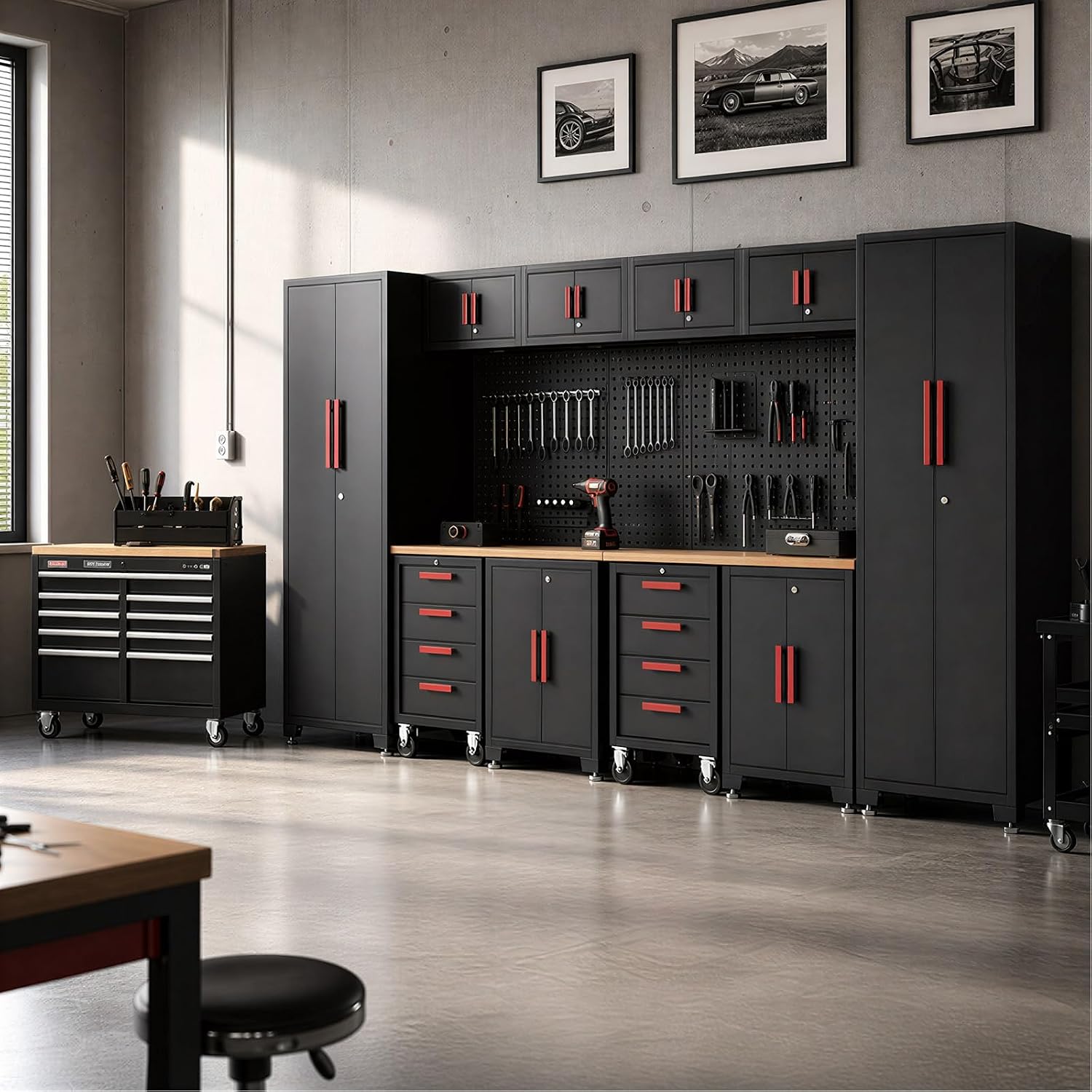
BIG RED Garage Storage Cabinets System, 12Pcs Workshop Cabinet Set in Black
Twelve pieces cover an entire wall, and doors keep sawdust off tools and finishes
The biggest spend in the group, and a fixed layout you have to plan your wall around
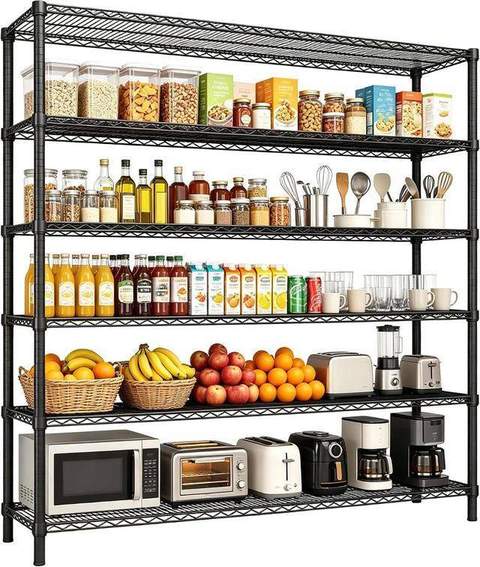
Garvee 3300LBS 5-Tier Metal Shelving for Garage Storage, 47" Wx17.7 D×72" H
3300 lb capacity, steel uprights, five tiers of 47-inch-wide shelf space
Open shelves collect dust, and a tall unit needs to be tied back to the wall
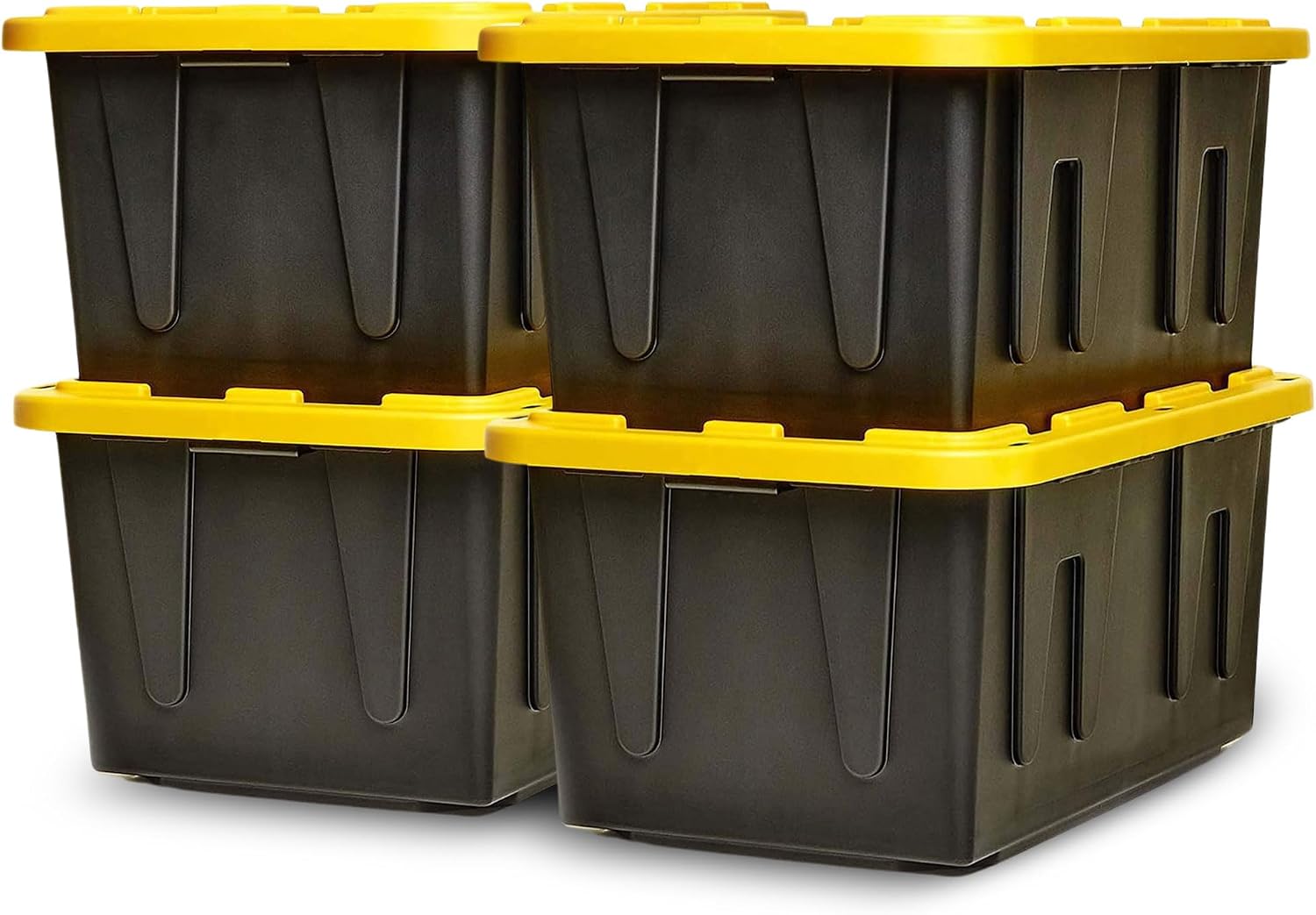
HOMZ Durabilt Plastic Storage Bins with Lids, 27 Gal, Black/Yellow, 4 Pack
27 gallons each with lids, opaque, and the simplest way to kill clutter fast
You cannot see inside, so unlabeled bins become mystery boxes within a year
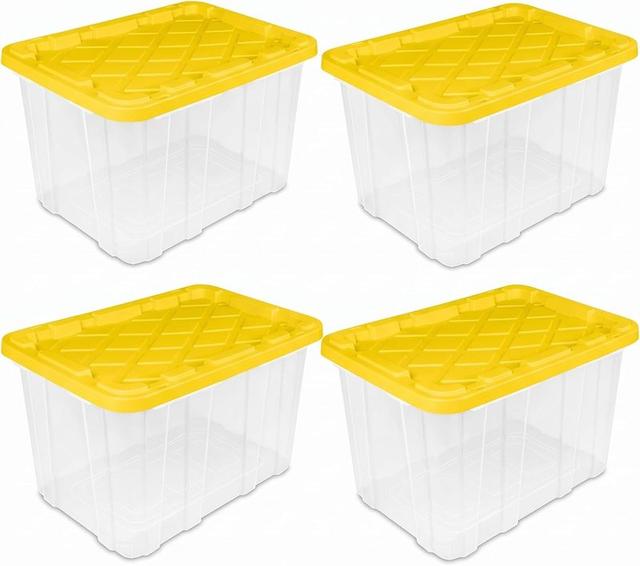
Large Industrial Storage Bins with Lids, 27 Gallon Clear Plastic Tote for Garage & Basement, Heavy Duty Stackable Totes for Storage and Organization, Yellow, 4-Pack
Clear bodies mean you see the contents without lifting a single lid
Clear plastic shows every scratch and dust line, and it does not hide anything
Prices and availability were captured from Amazon Creators API and may change.
How I judge a garage storage system
I do not grade storage on how it looks in a staged photo. I grade it on four questions, and they apply to every product on this list.
First, what are the brackets and uprights actually made of? Steel beats plastic every time, and it is not close. A plastic shelf that holds a box of Christmas lights proves nothing about what happens when you slide a loaded tool chest onto it.
Second, does the mounting hardware match the weight rating? The number printed on the box is a wish. The bracket is the fact. Any tall shelving unit should be tied back to a stud, and any wall cabinet should be screwed into framing, not drywall anchors. This is the single most common failure I get called out to fix.
Third, can I reconfigure it? A system you cannot rearrange is just expensive shelving. Your garage changes. The bike collection grows, the kids move out, the lawn equipment gets replaced. Good storage survives that.
Fourth, would I trust it with my tools? That is the real test, and it is the one that separates a shelf from a system.
One more thing specific to this list: cabinets and shelving sit on a floor that has a pitch, because garages drain. Every cabinet run I have ever installed needed shims on at least one end. Budget for that.
BIG RED 12-piece cabinet set: the finished look
This is the most complete answer on the list: a 12-piece workshop cabinet set in black, which means base cabinets, wall cabinets, and the pieces that let you run a continuous wall of closed storage. If you have ever swept sawdust off an open shelf and then swept it off the tools sitting on that shelf, you already understand why doors matter. Cabinets beat open shelving for anything you do not want coated in dust, and that includes power tools, paint, chemicals, and anything with a motor that vents.
The trade-off is planning. A 12-piece set is a layout, not a purchase. You need to measure your wall, decide where the workbench goes, and figure out whether the doors open into your parking space. Because it is modular, you can add or rearrange pieces, but you are committing to a footprint. In a one-car garage with a water heater in the corner, that footprint is the argument. In a two-car garage where one bay is for parking and one is for work, it is the obvious move.
For mounting, treat the wall cabinets like you would kitchen uppers: find the studs, hit them, and shim the base run level before you anchor anything. This set is also the biggest spend in this comparison, which is fine if you are buying a finished room instead of a shelf. Just be honest about which one you actually need.
Garvee 3300 lb shelving: the steel workhorse
Five tiers, 47 inches wide by 17.7 inches deep by 72 inches tall, and a 3300 lb capacity rating. That is the highest number on this page by a wide margin, and it is the reason this unit is my value pick. Steel uprights and five levels of shelf space at that width is a lot of vertical storage for the money.
Read the rating the way a contractor reads it. Capacity is a static, evenly distributed number, and it assumes the load is spread across the shelves and the unit is sitting on a solid, level floor. It is not a license to stack 3300 pounds on the top shelf. Heavy goes low, light goes high, and the top tier holds the empty coolers and the camping gear.
The other thing about a 72-inch tall unit: it is tall enough to hurt someone if it tips, especially in a garage where a car bumper or a kid on a bike is moving past it. Tie it back to a stud. The included hardware may or may not be what you want, and I would rather you overbuild that connection than trust a drywall anchor on a garage wall. Do that, and this shelf will outlive the garage.
The honest criticism is dust. Open shelving is open shelving. If your garage doubles as a woodshop, everything on these shelves gets a coat of fine dust. Bins on the shelves fix that, which is where the next two products come in.
HOMZ Durabilt 27-gallon bins: seal it and forget it
Four bins, 27 gallons each, lids included, black and yellow. This is the category that does the unglamorous work in a garage: holiday decorations, seasonal clothes, camping gear, the boxes your spouse keeps asking you to deal with. Twenty-seven gallons is the sweet spot size, big enough for a bulky item, small enough that you can still carry it loaded without hurting your back.
The opaque body is the feature and the flaw at the same time. Opaque means your garage wall looks tidy instead of looking like a yard sale, and it means nobody can see that you own four mismatched extension cords. It also means that in eighteen months, you will own four mystery boxes. Label them. Painter's tape and a marker on the end that faces out, and you never have to lift a lid to find the Halloween bin.
These stack, which matters more than people think. Stacking is how you use the vertical space above a shelf or on top of a cabinet run. Just keep the stack to a sensible height and put the bins you touch once a year at the top, not the ones you need every weekend.
Clear industrial totes: see everything, hide nothing
Same 27-gallon size class, different philosophy. These are heavy duty stackable totes with clear bodies and lids, sold as a four pack for garage and basement use. The clear body is the entire point. You walk up, you look, you grab the right bin. No lid lifting, no label reading, no mystery box.
That is worth real money if your storage is stuff you access often: tools you rotate through, kids' sports gear, automotive supplies, the parts bin you dig into every other weekend. Clear totes also make it obvious when a bin is overloaded, because you can see the plastic bowing under the weight.
The cost is that clear plastic is unforgiving. Scratches show, dust lines show, and the contents show, so a stack of clear totes has to be reasonably neat or it looks like clutter with a lid. In an unheated garage that swings through Ohio winters, clear plastic can also get brittle over the years, so treat them as bins to lift, not bins to drag across concrete. Keep them out of direct sun if you can.
The trade-offs that actually matter
Here is how I would frame the decision, because the four products are not interchangeable and the comparison only makes sense by category.
Visibility versus protection. Clear totes win on visibility. Opaque bins and closed cabinets win on protection and on how tidy the wall looks. If your garage is dusty, cabinet doors and opaque lids are doing real work. If your problem is that you cannot find anything, clear is the fix.
Capacity versus footprint. The Garvee shelving carries the most weight and gives you five tiers of 47-inch shelf space, but it is a 72-inch tall unit that needs floor space and a wall anchor. The cabinet set gives you closed storage and a work surface, but it commits you to a layout. Bins are the most flexible and the least structural. They hold what you put in them and nothing more.
Cost against permanence. Totes are the entry point and the easiest thing to add to later. Shelving is the middle step and the best value per pound carried. A 12-piece cabinet set is the finish line, and it is the one purchase on this list you should make after you have lived with a cheaper setup for a season and know where you actually want things.
Floor versus wall. The shelving unit and the cabinets both eat floor or wall real estate. Bins can go on top of either one. That is the argument for buying shelving first and totes second: the shelf creates the space, the bins organize it.
What I would put in my own garage
If I were starting from an empty two-car garage and buying from this list, I would put the Garvee shelving against the back wall for the heavy and bulky items, low and centered between the studs. I would stack the HOMZ bins on the upper shelves for seasonal gear and label the outward-facing ends. I would use the clear totes for the stuff I touch monthly, because that is where visibility pays for itself. Then, once I knew where the workbench belonged and where the light was good, I would plan the BIG RED cabinet wall around it.
That order matters. The people who regret their garage purchase are almost always the ones who bought the cabinets first, guessed at the layout, and then discovered the lawnmower no longer fits.
What I am testing next
Overhead racks are on my bench right now. Four units, 250 pounds of lumber on each, and a 30-day sag check with a level, because ceiling storage is free real estate until the ceiling sags. I will not recommend a rack until I can verify the joists and the hardware, and the same rule applies to everything above: the rating on the box is a claim, and the bracket is the truth.