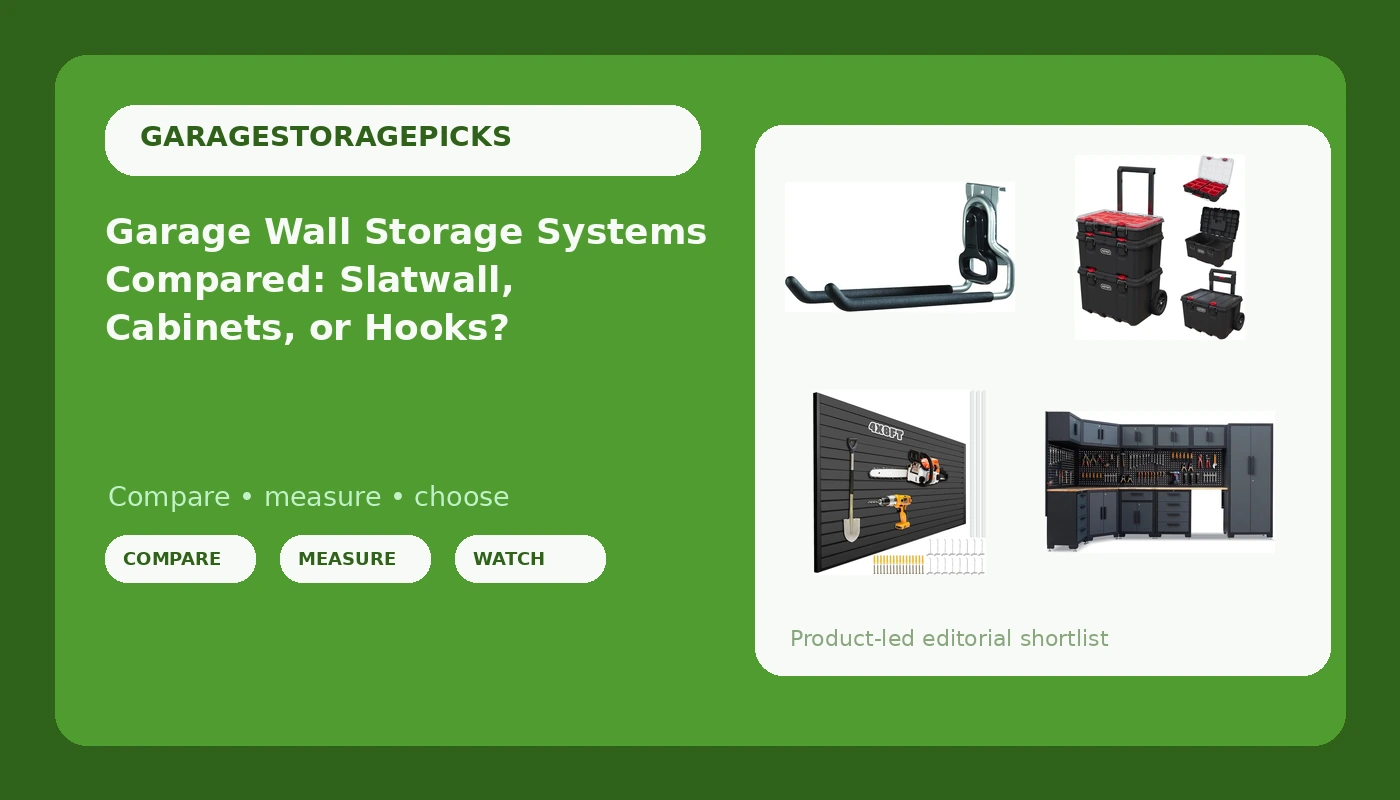
I have spent twenty years building, hanging, and repairing other people's garage walls, and garage wall storage systems fail in the same three places every time: the stud, the bracket, and the owner's willingness to move anything once it is up. This comparison puts four very different answers side by side, a 15-piece corner cabinet system, four PVC slatwall panels, a three-piece rolling modular tool box, and a single wall-mounted hook. Together they cover the whole range, from "I want every screw in a labeled drawer" to "I just need the rake off the floor."
A quick note before the table. I am not going to print prices here, because they move and I would rather you check them yourself than read a number that was stale by the time you scrolled this far. What I can tell you is what each one is for, what it asks of your wall, and where it stops making sense.
Related: Overhead Garage Storage Racks Compared
The short answer: for most garages, the best setup is a flexible wall surface for the bulky, seasonal stuff plus one closed cabinet for anything you don't want covered in sawdust. If I had to pick one product here to start with, it would be the slatwall panels, because they give you the most surface to grow into and the most ways to reconfigure. But that answer changes the moment you tell me you work in the driveway or that you have a corner nobody has touched since 2011.
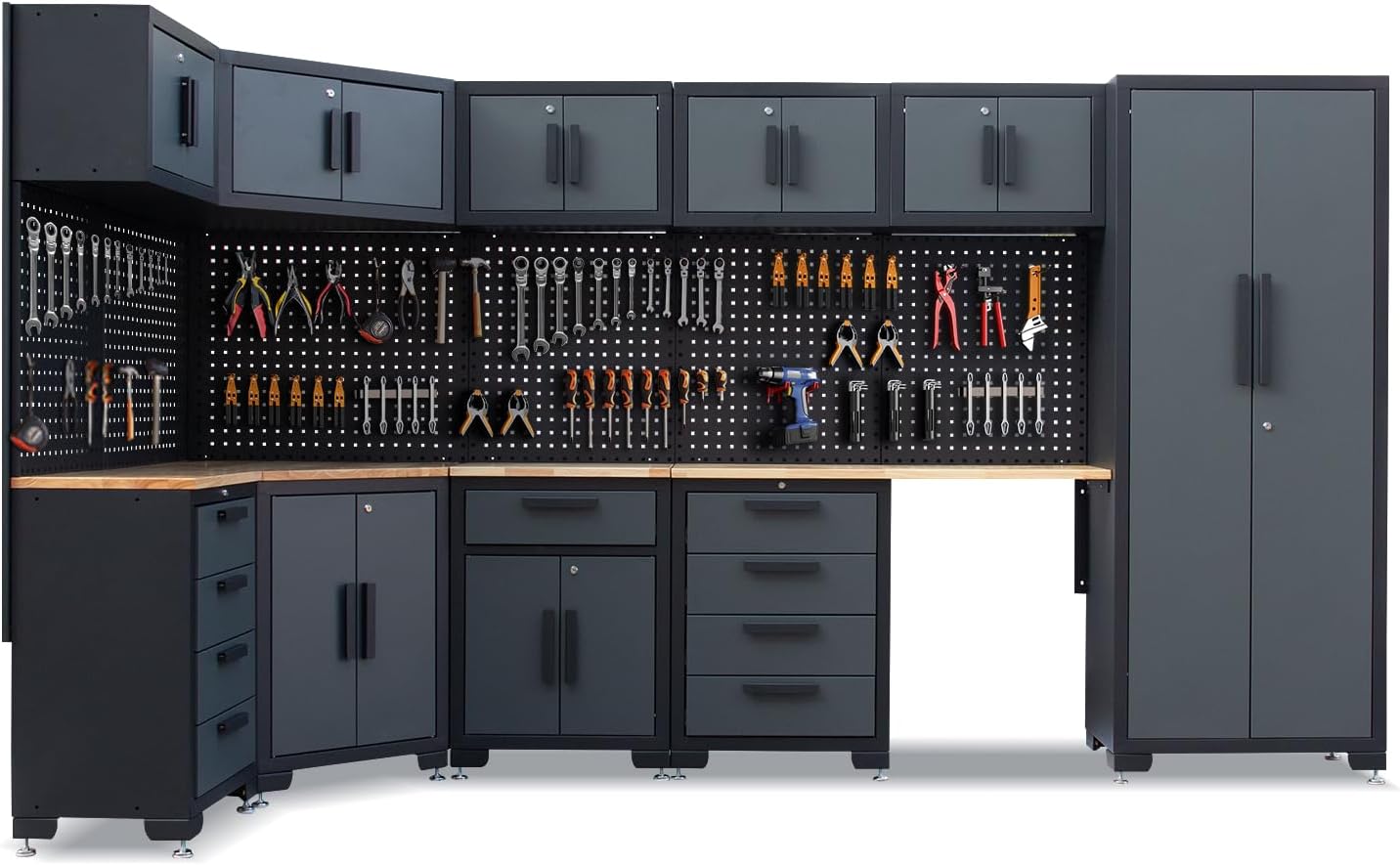
15-Piece Corner Garage Storage Cabinet System
Closed storage that keeps sawdust and overspray off your gear, and it finally uses the dead corner
A big single purchase and a weekend of assembly, not an afternoon
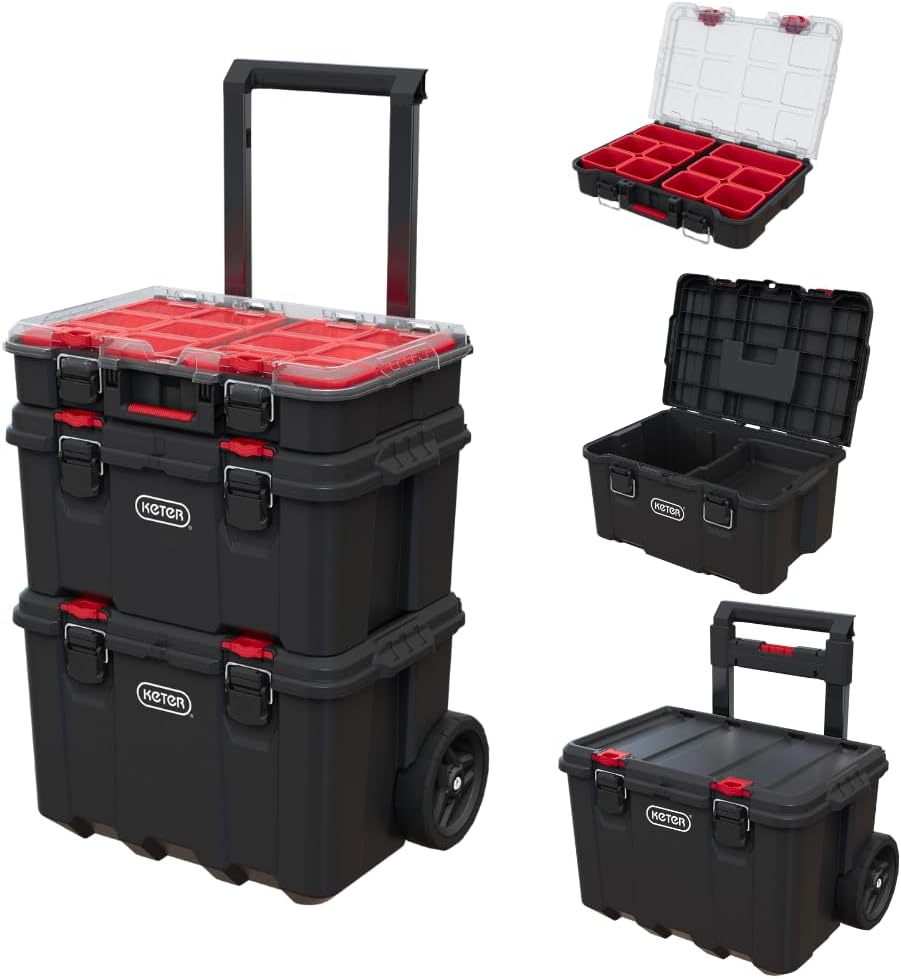
Keter Stack N Rolling Tool Box Modular Storage System 3 Piece
Rolls to the work instead of making you walk to it, and the stack changes with the job
It is floor storage, so it costs footprint and solves nothing on the wall
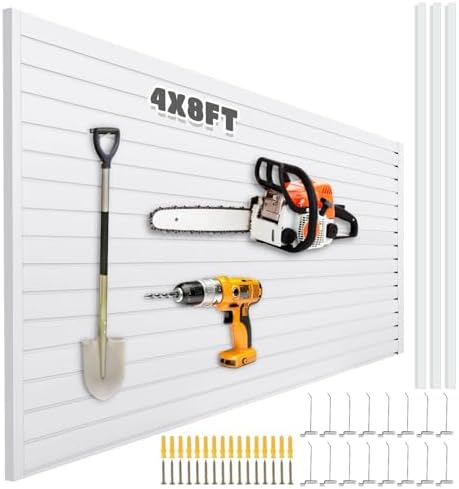
Landical 4 Pcs Slatwall Panels 4x8 ft, PVC Garage Wall Panels, Black
The most flexible surface here, and PVC will not rot, warp, or need paint
You are covering the wall, so the layout is a commitment and accessories are extra
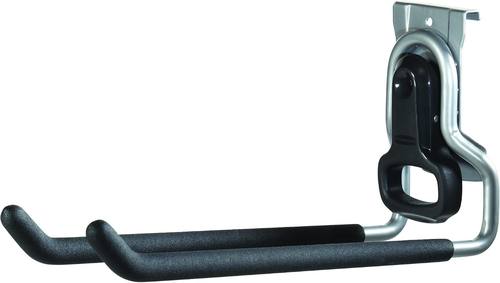
Rubbermaid FastTrack Multi-Purpose Hook, 50 lbs Capacity
The cheapest honest test of your wall, and it mounts straight into the rail
One hook is not a system, and it only works if the rail is anchored right
Prices and availability were captured from Amazon Creators API and may change.
How I judge a wall system before I trust it with tools
Four questions, in order. What are the brackets actually made of? Steel beats plastic once the load is real, and a track that flexes under a full tool chest is a track you will resent by month three. Does the mounting hardware match the weight rating? The box lies, the bracket does not. Second question: can I reconfigure it later? A system I cannot move is just expensive shelving. Third: what does it ask of the studs behind it? And last, would I trust it with my own tools? That is the whole test.
Two things get skipped constantly. The first is the stud finder, which is the most important tool in garage storage and the one everybody ignores. The second is your slab. Garage floors are pitched toward the door on purpose, and that pitch decides whether a cabinet needs shims. Cabinets that sit on a pitched floor without shims will rack, and doors will stop closing square. That is not a product flaw, it is an installation flaw, and it is yours to fix.
The corner cabinet system: closed storage for a shop that makes dust
This is the closed-storage answer, a 15-piece system configured for a corner. If you cut wood, grind metal, or spray anything in that garage, cabinets beat open shelves for one reason: your stuff does not end up coated. Every open shelf in a working shop turns into a dust shelf, and the contents turn into a project before you can use them.
The corner placement is the smart part. Most garages have one corner that becomes a graveyard for ladders, a broken cooler, and a bag of something from 2019. A corner set turns that dead zone into usable volume without stealing wall space you need for bikes.
What it asks of you: a weekend, not an afternoon. Fifteen pieces means assembly, and it means deciding the layout before you start bolting things together. It also asks for a reasonably flat, level spot, and per the pitch point above, possibly shims. And it is a big single purchase, so confirm the return policy before it ships.
If your problem is visual chaos and small parts, this is the product that fixes it. If your problem is that two bikes and a ladder live on the floor, this will not help.
The PVC slatwall panels: maximum surface, one real commitment
Four 4x8 ft PVC panels in black is a lot of wall, and slatwall is the most flexible surface in this comparison. Hooks, brackets, and shelves clip into the grooves wherever you want them, and when the bike collection grows or the stroller leaves the house, you move the hardware instead of rebuilding the wall. That is what reconfiguring actually looks like.
PVC is the right material for a garage. It does not rot, it does not need paint, and black hides the scuffs that a wall takes when you lean a ladder against it. Compared to bare drywall, it also takes a hit without turning into a crater.
The trade-off is commitment. You are covering the drywall, so you find the studs first and you plan the layout before the first screw goes in. Panels screwed only into drywall will pull, and a slatwall that sags is worse than no slatwall because you already paid for it. Plan for the studs, and if the spacing does not line up with the panels, add horizontal blocking. That is a cheap step and it is the difference between a system that holds a tool chest and one that holds a garden hose.
Second trade-off: accessories. Groove spacing is not universal, so check that the hooks and baskets you already own will fit, or budget for new ones. Proprietary accessories are a pet peeve of mine, and they are the hidden cost of any panel system.
The rolling modular tool box: storage that moves
This one is not wall storage at all, and that is exactly why it belongs in the conversation. The Keter Stack N Rolling Tool Box is a three-piece modular system: a rolling base with stackable boxes on top. If you work in the driveway, in the yard, or on a job across town, a wall system does nothing for you. Tools that stay in the garage do not help when the project is at the curb.
Modularity is the selling point. The stack goes up and comes apart depending on the task, and the rolling base means you are not making four trips. For anyone who has carried a full tool bag up a ladder, that matters.
Where it loses: it is floor storage. It takes footprint in a room where footprint is the scarcest resource, and it does nothing about the rake, the hose, or the bikes on the wall. In a two-car garage it is one more thing to move before you park. Buy it because you move your tools, not because you want your walls organized.
The FastTrack hook: the cheapest honest test of your wall
A single hook with a 50 lb capacity rating, satin nickel, designed to mount directly into the FastTrack rail. This is the least expensive way to find out whether your plan is any good. Hang a ladder, a hose reel, or a couple of bikes on it, live with the placement for a month, and then decide where the real money goes.
Understand the structure here, because it is where people get burned. The hook is only as strong as the rail it clips into, and the rail is only as strong as the fasteners holding it to the studs. If the rail goes into drywall with anchors, that 50 lb rating is fiction. If it goes into studs, the hook holds what it says it holds. The rating is honest only when the mounting hardware matches it, and mounting hardware is the weak point in nearly every failure I have been called to look at.
It is also the right answer for the specific stuff that never fits anywhere else: shovels, extension cords, hoses, folding chairs. It is not the answer for boxes of paperwork or anything you want to keep clean, because it is an open hook on an open wall.
Where the trade-offs actually land
Weight ratings printed on the box are a starting point, not a promise. The bracket and the fastener decide the outcome. That is why the hook, which is the simplest product here, is also the best teacher: it forces you to deal with the rail and the studs before you spend on anything bigger.
Reconfigurability separates the slatwall and the rolling box from the cabinet set. Slatwall lets you move hooks. The rolling stack lets you move the whole box. Cabinets are static once assembled, which is fine if you know what you own and annoying if your garage is still changing every year.
Footprint is the other axis. The cabinet set converts a dead corner into volume, so it adds usable storage without adding floor space. The rolling box does the opposite. Slatwall uses wall area you were not using anyway. The hook uses almost none.
And there is the time question. Nobody organizes a garage in a weekend. Wall panels and a hook rail are a Saturday. A 15-piece cabinet system is two weekends, minimum, and that is with a helper. Plan the layout on paper first, because moving a cabinet set after it is loaded is a job you will put off for a year.
How I would sequence it
Start with the hook and a rail. It costs the least, it forces you to find the studs, and it teaches you where you actually reach for things. Live with it for a month.
Then commit to a surface. If you have a long wall and your storage needs change every season, the slatwall panels are the best surface here. If you cut and sand in that garage and want things out of sight, the corner cabinet system is the right call, and the corner is free real estate you are currently wasting.
Buy the rolling stack if your tools travel. Buy the cabinet set if they never leave. Do not buy both expecting them to solve the same problem, because they do not.
Bottom line
For most garages, the winning combination is flexible wall surface plus one closed cabinet, and the slatwall panels are the strongest single start in this group. The FastTrack hook is the low-risk first step that proves your wall can carry a load. The corner cabinet set is the answer for a working shop that generates dust. The rolling modular tool box is for people whose tools leave the building.
Check your studs, match your hardware to the weight, and shim the cabinets on that pitched slab. Do that, and any of these four will outlast the garage.