I have hung storage on garage walls for twenty years, and the same four questions come up on every job. What holds the weight? What holds the wall? Can I move it later? Does it look like I planned it, or like I ran out of time? When homeowners ask me to compare garage wall storage systems, I tell them they are not really shopping for storage. They are shopping for a mounting strategy with hooks and shelves attached.
That is the frame for this comparison. The four products here do four different jobs, and three of them are not cabinets at all. One is a fully welded steel cabinet set that closes. One is a plastic wall track kit that gets long handles off the floor in an afternoon. Two are vertical wood racks that turn a narrow strip of wall into a place for boards, decks, and long stock. Picking between them is less about which is best and more about which problem is actually bothering you when you park the car.
The short answer: if you want closed storage and you have the budget, the welded steel cabinet set is the only one here that keeps sawdust off your stuff. If you want the cheapest real improvement, the wall track kit does the most per dollar. The two racks are the right call only if your clutter is boards and long material, not tools.
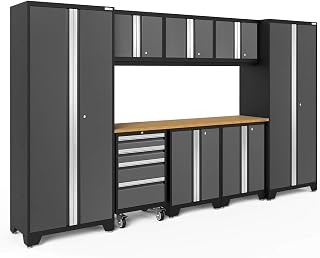
NewAge Products Gray Bold Series 9PC Garage Cabinetry Set
Fully welded 24-gauge steel, 132 inches wide, and doors that actually close over the mess
The largest spend in this group, and it commits you to one long footprint
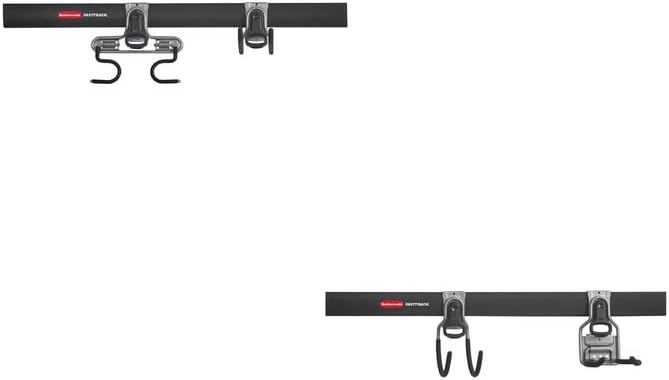
Rubbermaid Fasttrack Garage Storage System Tool Hanging Kit
The cheapest way to get rakes, shovels, and long handles off the concrete
Plastic track and hooks, so it is not the answer for a loaded tool chest
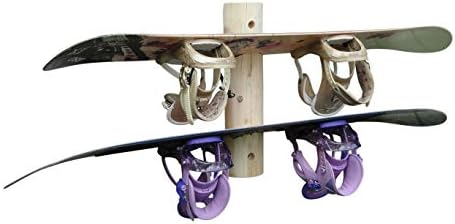
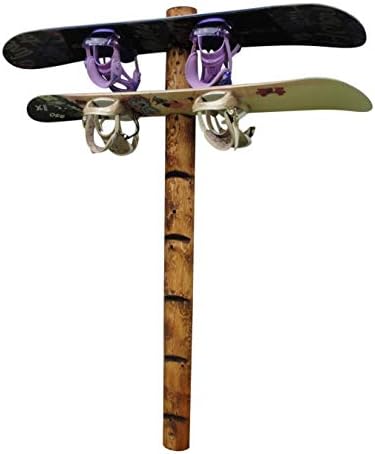
2-Place Wall-Mounted Snowboard Log Rack
Unfinished wood you can paint or stain to match the wall behind it
Two boards only, so a growing quiver outgrows it fast
7-Place Wall-Mounted Snowboard Log Rack
Holds a whole quiver plus decks and long stock in one narrow vertical footprint
A bigger wall commitment, and canyon brown will not match every trim color
Prices and availability were captured from Amazon Creators API and may change.
The welded steel cabinet set: closed storage, no sawdust
The NewAge Products Bold Series set is the outlier in this group because it is furniture, not hardware. It is 24-gauge steel, fully welded, nine pieces, 132 inches wide by 18 inches deep by 76.75 inches tall. Those numbers matter more than the finish. A 132-inch run is a little over eleven feet, which means you are committing an entire wall of a two-car garage, and you should measure that wall twice before you order anything.
Two things make it worth the money for the right buyer. The first is fully welded construction. A cabinet that arrives welded does not wobble when you open a door with one hand and hold a drill in the other. Bolt-together cabinets flex, and flex turns into rattles and misaligned doors within a couple of seasons. The second is doors. I say this as a contractor who built his own plywood wall system first: open shelving in a garage collects everything the air carries, and the air in a garage carries sawdust, road grit, and lawn fertilizer dust. If what you are storing is worth keeping clean, closed beats open.
The catch is the floor. Garage slabs are pitched toward the door so water runs out, and that pitch runs somewhere between a nuisance and a real problem depending on your slab. A run this long will need shims under at least one end, and shims under a loaded cabinet are only as good as the level you set them with. Plan for it rather than discovering it at the end of an install. You can see the current configuration and finish options here: Visit on Amazon →.
The wall track kit: the value pick for long handles
The Rubbermaid FastTrack tool hanging kit is the cheapest real change you can make in a garage, and I say that knowing the track is plastic. For bikes, shovels, rakes, brooms, and garden tools, plastic track is plenty. The loads are light, the leverage is short, and the whole thing installs in an afternoon with a drill and a level. That is the honest case for it.
Where it stops is anything heavy and awkward. A track system's weak point is never the hook you can see, it is the fastener holding the track to the wall and the wall itself. If you are hanging a loaded tool chest or a ladder that weighs more than you want to think about, this is not the system for that job, and no hook upgrade fixes it. Buy the right system for the weight class instead of pushing a value kit past its limit.
The other reason I like track systems generally: they reconfigure. Hooks slide, brackets move, and when the bike collection changes you are not re-drilling a wall. A garage system you cannot rearrange is just expensive shelving. Check the current kit contents and price here: Visit on Amazon →.
The two-place rack: vertical storage for boards and long stock
This 2-place wall-mounted rack is a simple idea done in wood. Two boards, mounted vertically against the wall, indoors or out, with an unfinished face you can paint or stain to match whatever is behind it. It is built for snowboards, and it works just as well for long lumber, pipe, trim stock, and anything else that is too long for a shelf and too heavy to lean in a corner.
Vertical storage is underrated because it uses wall height instead of floor area, and floor area is the thing you never get back in a garage. Two boards take up maybe a foot of wall width and no floor at all. Compare that to a horizontal wall rack that eats four feet of prime wall space at eye level, which is where your most-used tools should live anyway.
The limit is honest and printed on the name: two places. If you have two boards, this is the tidy answer. If you have five, you will buy this one, fill it, and then buy another, and now you have two racks with a gap between them. See the current listing here: Visit on Amazon →.
The seven-place rack: the same idea, scaled up
The 7-place rack is the version to buy if you already know you have more than two boards. Seven places in a vertical footprint covers a family quiver, and the listing also pitches it for wakeboards, skateboards, and general wood storage. It comes in canyon brown, which is a warmer tone than unfinished pine and looks intentional on a finished garage wall rather than like a project you have not gotten to yet.
The trade-off is wall commitment and color. A seven-place vertical rack is taller and wider than the two-place version, and you need clear studs behind the full height of it, not just the top. Canyon brown is also a specific color. On a gray or white wall it reads as furniture. Against stained trim or a cedar wall, it can look like a mismatch. That is a cosmetic problem, not a structural one, and it is the kind of thing that bothers you for exactly as long as it takes to notice it once.
If your clutter is boards and long stock, one of these two racks solves it in an hour of work. Here is the current listing: Visit on Amazon →.
Mounting hardware is the whole game
Every one of these four products hangs on the same thing: the structure behind your drywall. A stud finder is the most important tool in garage storage and the one everybody skips. Find the studs, mark them, and put your fasteners there. On a cabinet run this wide, that means hitting multiple studs across the length, not one in the middle with the ends floating.
Two specific failures I see on almost every garage I walk into. The first is drywall anchors used for anything that holds real weight. Anchors are fine for a picture frame. They are not fine for a rack holding lumber or a track holding a ladder, and the failure mode is not gradual, it is sudden. The second is a weight rating printed on the box rather than on the bracket. The box is marketing. The bracket is physics. If the number you are relying on is on the packaging, you do not have a number.
For ceiling-mounted systems, the rules get stricter, because a ceiling carries a dead load that never goes away. Any rack that puts weight overhead should be bolted into joists, and the included hardware in most kits is not up to that job. That is a separate conversation from wall storage, but it is the same principle: the fastener decides, not the product photo.
How to choose between these four
Think about what is actually on your floor right now, because that tells you which of these you need.
If your floor is covered in long-handled tools and garden equipment, the track kit is the answer. It is the cheapest, it installs fastest, and it reconfigures as your equipment changes. This is the starter move for most garages.
If your floor is covered in boxes, bins, and things you do not want to look at, you need doors. That is the cabinet set, and nothing else in this group solves it. Open shelves do not hide anything, and in a working garage they do not keep anything clean either.
If your floor is covered in boards, long stock, or a pile of lumber that keeps falling over, one of the two vertical racks is the answer, and the only question is two places or seven. Buy for the collection you will have in two years, not the one you have today.
There is also a sequencing answer. Most garages I organize get the track kit first, because it is cheap and it clears the floor immediately. Cabinets and racks come second, once the layout is settled and you know where the permanent stuff goes. The other order, cabinets first, usually means moving cabinets later, and moving a loaded 132-inch cabinet run is a two-person job you do not want to repeat.
The bottom line
None of these four is a universal winner, and anyone who tells you one is has not seen your garage. The cabinet set is the best closed storage here and the biggest commitment. The track kit is the best value and the fastest win. The two racks are the right tool for boards and long material, and the seven-place version is the one to buy if you are past the two-board stage.
Whatever you pick, budget an hour for the stud layout before you drill the first hole, and match the fastener to the load. Do that, and any of these four will outlive the garage it hangs in.