Related: Best Garage Wall Storage Systems for Heavy Tools
I have been hanging other people's stuff on garage walls for twenty years in and around Columbus, and I have torn out almost as much as I have installed. The tear-outs teach you more. A shelf that failed almost never failed because the shelf was weak. It failed because somebody trusted a drywall anchor with a tool chest, or because the bracket was pot metal dressed up as steel. So when I size up garage slat wall panels, I am not looking at the color. I am looking at the material, the mounting points, and whether the whole system can move when your life changes.
There are two philosophies for a garage wall. One is an open, reconfigurable panel system, where hooks and baskets slide wherever you need them this month and move somewhere else next month. The other is closed steel cabinets, where everything disappears behind a door and stops collecting sawdust. Most garages end up wanting a little of both, and that is the pair I want to walk through here.
Everything below comes from one short list: three finishes of the same slatwall panel and one 12-piece steel cabinet set. No invented specs and no made-up test numbers. Just how the pieces are built, what they are good at, and what I would check before I hang weight on them.
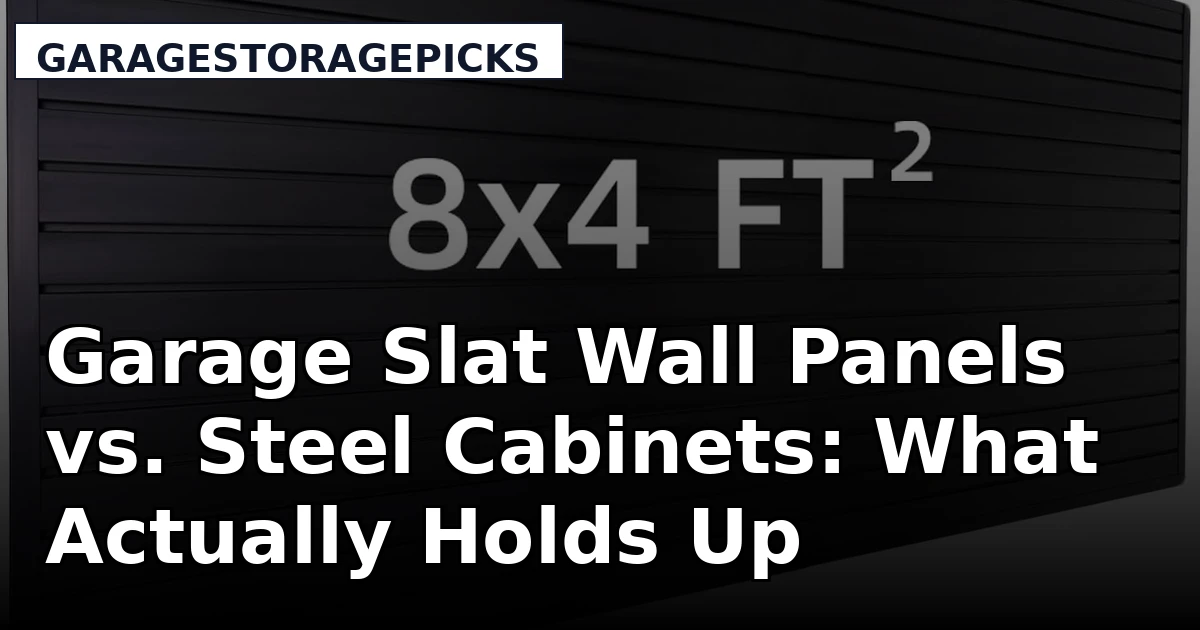
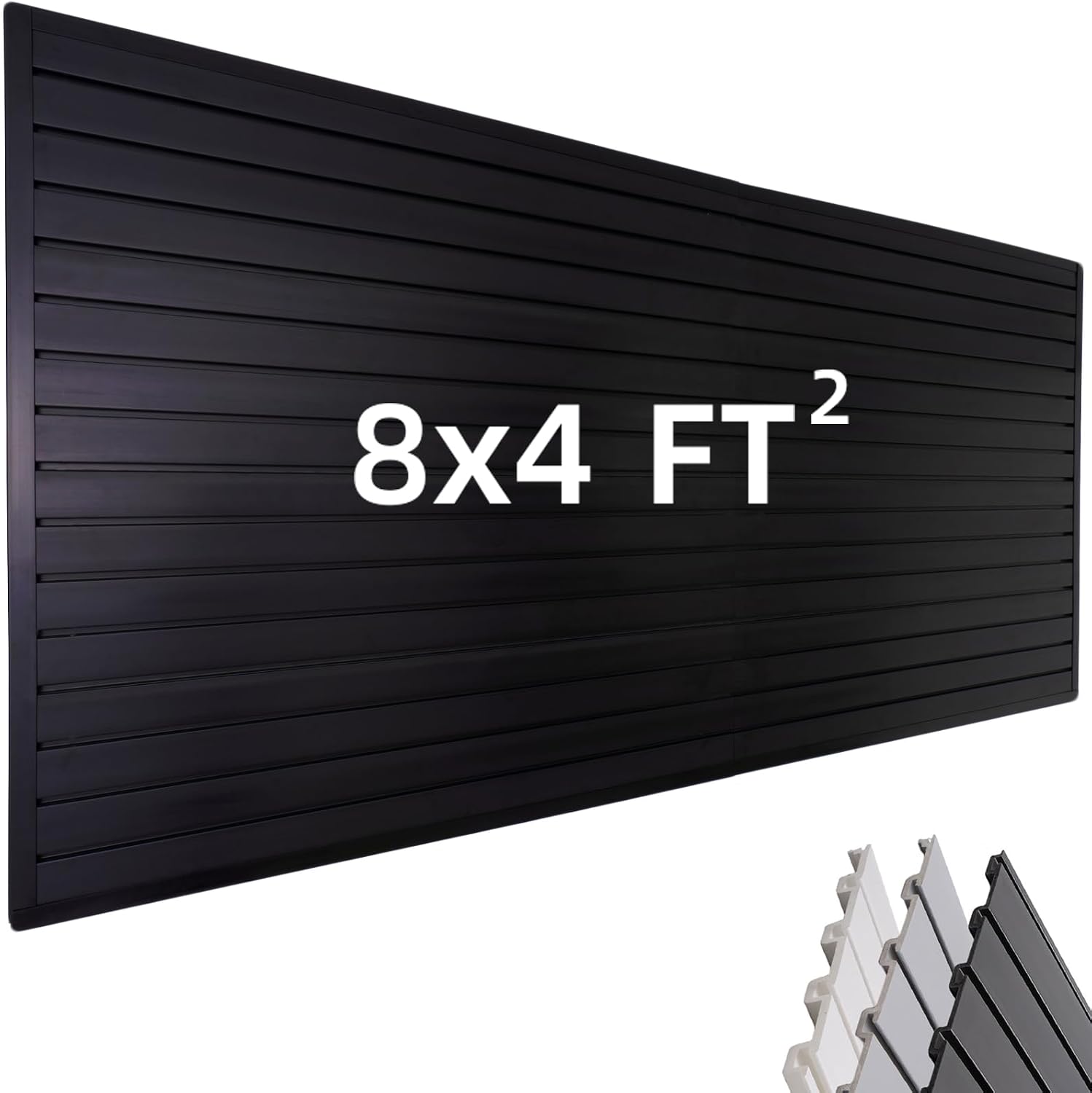
Best Overall Wall System: FRAYSCENT Slat Wall Paneling in Black
Start with the material, because it decides everything else. This is a PVC slat board, not a steel track system. PVC does not rust, it does not care about a damp garage in February, and it wipes down with a rag when you are done sanding. What it does not do is shrug off a heavy dead load hanging from one hook the way steel track will. If you are hanging shovels, bikes, cords, hoses, and a couple of cordless tool stations, PVC is plenty. If you want a full tool chest swinging off a single bracket, you want steel. I say that plainly because it saves people money and heartbreak.
The panel is an 8ft x 4ft sheet, so one piece covers 32 square feet of wall. That is the number to plan around. Measure your wall, subtract for outlets and the garage door track, and figure out how many sheets you actually need before you order. Most people overbuy because they measure the wall instead of the usable wall.
Black is the finish I would pick for a working garage, and not because of style. Dark slat board hides scuff marks, tire smudges, and the general grime a garage produces. You can hose it off or hit it with a damp cloth and it looks close to the day you hung it. If your garage doubles as a shop and you drag ladders past that wall every week, black is the forgiving choice.
The important part is what you mount it to. Find the studs, mark them, and run your fasteners into wood, not into drywall. A slatwall panel spreads load across its face, which is exactly why it works, but it still has to hand that load to something structural behind it. Use a stud finder, verify the marks with a thin nail, and do not skip the step where you confirm both edges of the stud. I have seen panels hung on four screws into nothing, and they held right up until they did not.
The Same Panel in White and Grey
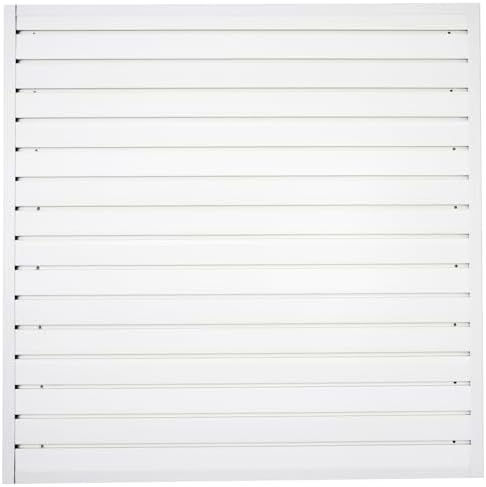
Same panel, same 8ft x 4ft coverage, different finish. White is the choice when the garage is really a workshop and you want light bouncing around. If you have ever tried to find a dropped screw in a dark corner of a garage, you know why that matters. White slat board turns a wall into a reflector, and paired with a couple of shop lights it makes the whole space feel bigger and cleaner. The trade is that it shows every scuff and every greasy handprint, so it suits a cleaner, more deliberate setup.
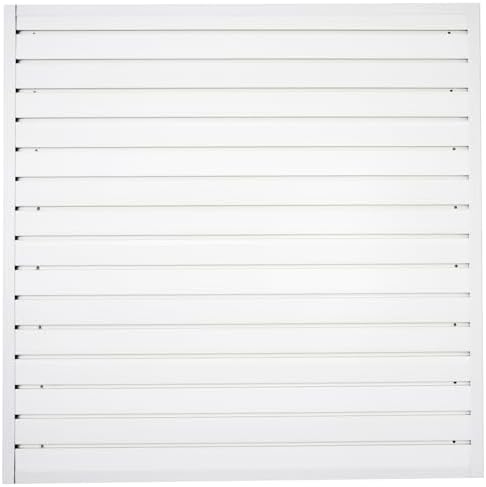
Grey sits in the middle and is the finish I recommend when you cannot decide. It hides dirt better than white and it does not soak up light the way black does. In a two-car garage with one bay for parking and one bay for work, grey on both walls keeps the space looking consistent without making it feel like a cave.
The three finishes are the same product underneath, so pick on appearance and buy the one that matches how you actually use the space. Do not buy black for a workshop you want bright, and do not buy white for the bay where you change oil.
One more thing about all three: because these are panels rather than a fixed shelving unit, you can reconfigure. Hooks move, baskets move, and the bike hook that sat at eye level last summer drops to knee height when the kids grow. A system you cannot reconfigure is just expensive shelving. This one reconfigures.
Best for Closed Storage: Torin 12-Piece Garage Cabinet System
Here is the other half of the argument. Slatwall is open storage, which means everything on it is visible and everything on it collects dust. If your garage is also your woodshop, open storage is a losing battle. Sawdust gets into everything, and a wall of exposed tools looks like a yard sale by the end of a project.
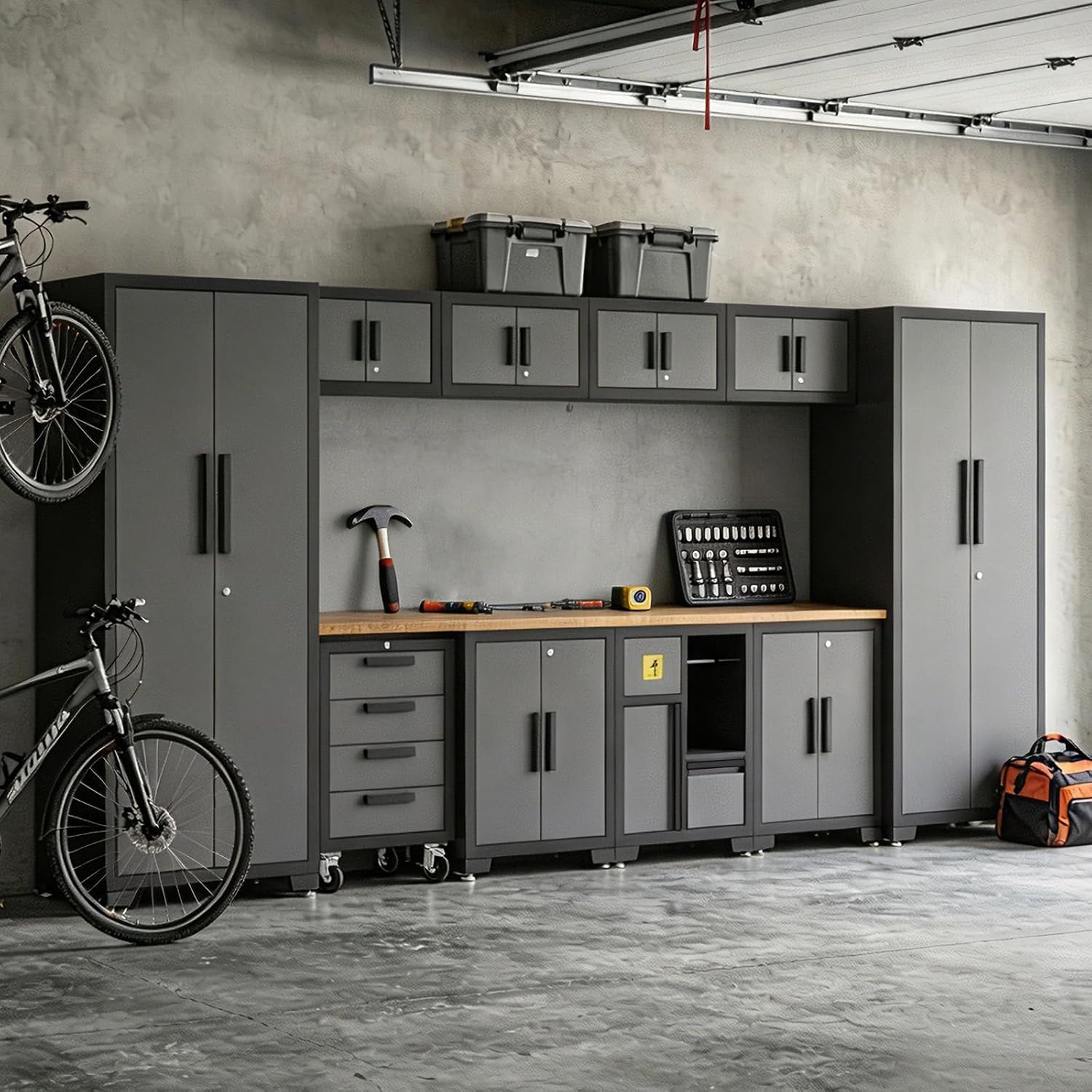
That is the case for cabinets. This Torin set is a 12-piece workshop cabinet system in black, which is enough pieces to build out a whole wall or a whole corner rather than one cabinet standing alone. Closed doors mean the sawdust stays on the outside, the mess stays hidden, and the garage looks put together when you pull the car in. It is also the safer choice for anything sharp, anything chemical, and anything you would rather not advertise to somebody walking past an open garage door.
The honest caveats. Steel cabinets are heavy, and they are only as good as what they sit on. Garage floors have pitch, which is the slope toward the door so water drains out. A cabinet that has to be level on a sloped floor needs shims, and if you skip the shims the doors will not line up and the drawers will not glide. Check the pitch before you set anything in place, and shim the low side. That is a ten-minute job that saves you a year of annoyance.
Second caveat: buy the set for the layout you have, not the layout you wish you had. Measure your wall, account for the garage door track and the swing of the man door, and leave yourself working room. A cabinet you cannot open all the way is a cabinet you will resent.
What I Check Before Anything Goes on the Wall
This is the part that actually decides whether your garage storage survives, and it has almost nothing to do with the brand on the box.
The studs. The most important tool in garage storage is a stud finder, and it is the one everybody skips. Every wall-mounted system, panel or cabinet, has to transfer load into framing. Find the studs, mark them top to bottom, and confirm the marks with a small nail before you drill. In a finished garage the studs are behind drywall, and drywall tells you nothing about what is behind it.
The hardware. Weight ratings are honest only when the mounting hardware matches them. The rating printed on the box describes the product in a lab on a perfect wall. Your wall is not that. Use fasteners rated for the load you are actually hanging, plus margin, and if a kit ships with anchors that look like they belong behind a picture frame, buy better ones.
The ceiling question. Overhead storage is free real estate until the ceiling sags. That is a separate project from anything on this list, but it belongs in the same conversation, because most garage ceilings were not built to carry a dead load forever. If you are adding overhead racks, verify the joists and the hardware first. Drywall anchors have no business in a garage ceiling.
Reconfigurability. A garage system you cannot change is just shelving. The bike collection grows, the stroller goes away, the lawn equipment gets replaced. Whatever you install should accept new hooks, new baskets, and new positions without a tear-out.
The reference table
| Product | Type | Best for | Price |
|---|---|---|---|
 Visit on Amazon → Visit on Amazon →FRAYSCENT Slat Wall Paneling, Black, 8ft x 4ft |
PVC slat board panel | Full wall tool, bike, and hose storage | $159.99 |
 Visit on Amazon → Visit on Amazon →FRAYSCENT Slat Wall Paneling, White, 8ft x 4ft |
PVC slat board panel | Bright workshop walls that bounce light | $189.10 |
 Visit on Amazon → Visit on Amazon →FRAYSCENT Slat Wall Paneling, Grey, 8ft x 4ft |
PVC slat board panel | Two-car garages that want a middle ground | $188.54 |
 Visit on Amazon → Visit on Amazon →Torin Garage Storage Cabinets System, 12-Pcs Workshop Cabinet Set in Black |
Steel cabinet set | Closed storage that keeps sawdust off your tools | Visit on Amazon → |
Analysis: where each one earns its place
Panels and cabinets solve different problems, and the mistake is buying one and expecting it to do the other's job. Panels win on access and flexibility. Everything you use weekly sits at eye level and comes off the wall in one motion. Cabinets win on protection and appearance. Everything you use seasonally or rarely disappears behind a door and stops gathering dust.
If you are building a wall from scratch, I would start with the panel system and live with it for a month before ordering a single cabinet. You will learn what you actually reach for. Then you can size cabinets around the stuff that turned out to be clutter on a hook.
On material, remember what I said at the top. PVC slat board is the right call for normal garage loads, and it will never rust or rot. Steel track is the right call for a professional load. Neither is a mistake, but buying the wrong one for your load is.
Should you buy the FRAYSCENT slat wall panels?
Yes, if your load is normal garage life: bikes, ladders, hoses, cords, hand tools, and a couple of cordless stations. The 8ft x 4ft sheet covers a real wall, the PVC will not rust or rot in a damp garage, and it wipes clean. Black if you work dirty, white if you want light, grey if you want both.
The catch is the wall behind it. This panel is only as strong as the studs you fasten it to. Find the studs, use good fasteners, and it will hold up. Hang it on drywall anchors and you have built a very expensive thing to pick up off the floor.
Should you buy the Torin 12-piece cabinet set?
Yes, if your garage doubles as a shop or you are tired of looking at everything you own. Twelve pieces in one system means you can build a real wall of closed storage instead of a random collection of boxes, and black steel hides a lot of garage life. It is the answer for the stuff you want hidden, protected, and off the open wall.
Budget the shims and the layout time. Check the floor pitch, shim the cabinets level, and leave room to open every door and drawer. Do that and a cabinet set will outlast most of what is parked next to it.