Related: Best Garage Wall Storage Systems for Heavy Tools
A garage wall storage system fails in one place: the connection between the rail and the house. Not the hook, not the bin, not the shelf deck. The connection. I've pulled more sagging, half-fallen racks off garage walls than I can count, and they all tell the same story, drywall anchors where there should have been lag bolts into studs.
I've been a general contractor in Columbus for 20 years. I've organized more garages than most people have parked in. I built my own wall system out of plywood once, watched it sag for two seasons, and replaced it with real hardware. So when I look at a garage storage system, I'm not looking at the photos. I'm looking at what carries the load, what the brackets are made of, and whether I can move the whole thing next spring when the bike situation changes.
The four products below cover the four jobs a garage actually needs done. A wall track kit for the stuff that lives at eye level. A freestanding rack for bins and bulk. Cord and hose management so the extension cords stop mating in the corner. And a full cabinet run with a workbench for anyone who is done with open shelving and sawdust.
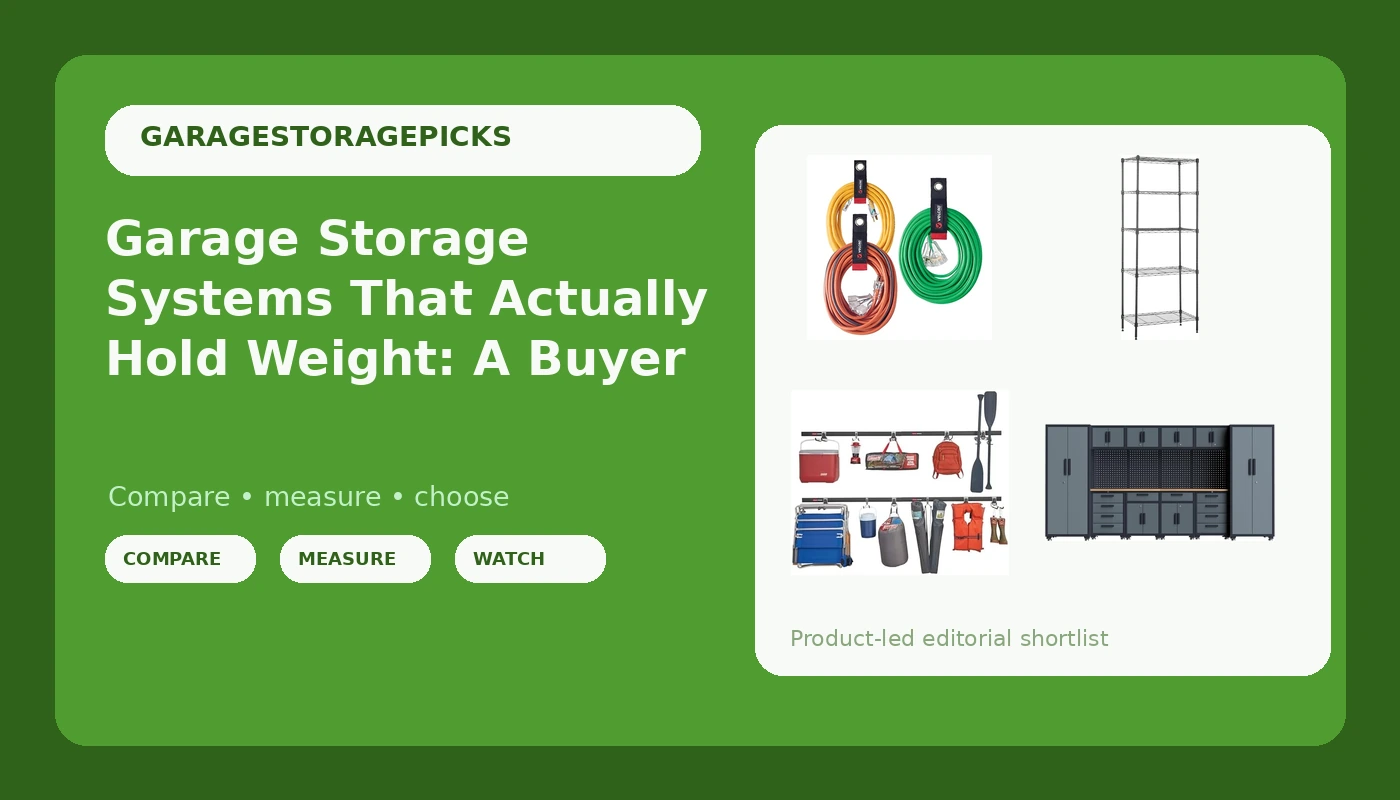
The Wall System Most Garages Should Start With: Rubbermaid FastTrack 15-Piece Kit
This is the kit I have in my own garage, and it's the one I recommend first to homeowners who are tired of tripping over shovels. Four rails, eleven hooks. That's enough track to cover two walls of a standard two-car garage, and enough hooks to get bikes, ladders, hoses, and long-handle tools off the floor.
It installs in an afternoon. Mark a level line, find your studs, drive the hardware into wood, and the rails go up. The hooks slide along the track and reposition without tools, which is the entire point of a track system. A system you can't reconfigure is just expensive shelving. When your kid's bike gets bigger or you buy a second ladder, you move a hook. You don't re-drill your wall.
The honest trade-off is the track material. This is a plastic rail system, not steel. That's fine for bikes, hoses, rakes, folding chairs, and anything you'd carry with one hand. It is not the system I'd hang a loaded tool chest from. Keep the heavy stuff low, put the weight near a stud where you can, and don't hang anything from the middle of a rail span. The bracket tells the truth even when the box doesn't.
One more thing: use lag bolts into studs, not the anchors that come in the bag. Every wall track failure I've been called to look at was a fastener problem, not a track problem.
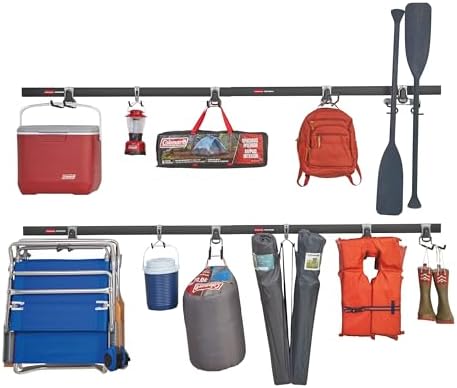
The Freestanding Backbone: Amazon Basics 5-Shelf Steel Shelving Unit
Freestanding steel shelving is the least glamorous thing in this article and the one that will hold the most stuff. Five shelves, adjustable heights, 200 pounds per shelf according to the listing, 13.4 inches deep by 23.2 inches wide by 60 inches tall.
That 60-inch height is a feature, not a compromise. Tall racks look efficient until you're dragging a ladder out to reach the top shelf. This one keeps the top shelf within reach for most people, which means you'll actually use all five levels instead of treating the top one as a place to forget things.
The 13.4-inch depth is the number that matters in a garage. Deep racks eat your parking space. Shallow racks hold bins, paint cans, and bulk goods without turning your third bay into a hallway you have to walk sideways through.
Two install notes from a contractor. First, your garage floor has pitch. Slabs slope toward the door so water runs out, which means a freestanding rack will rock unless you shim the front legs. Shim it, check it with a level, then load it. Second, the 200 pounds per shelf figure assumes the load is spread across the shelf. Put 200 pounds in one corner and you're testing the deck, not the rating.
If you want capacity and you don't want to own a stud finder, this is where the money goes first.
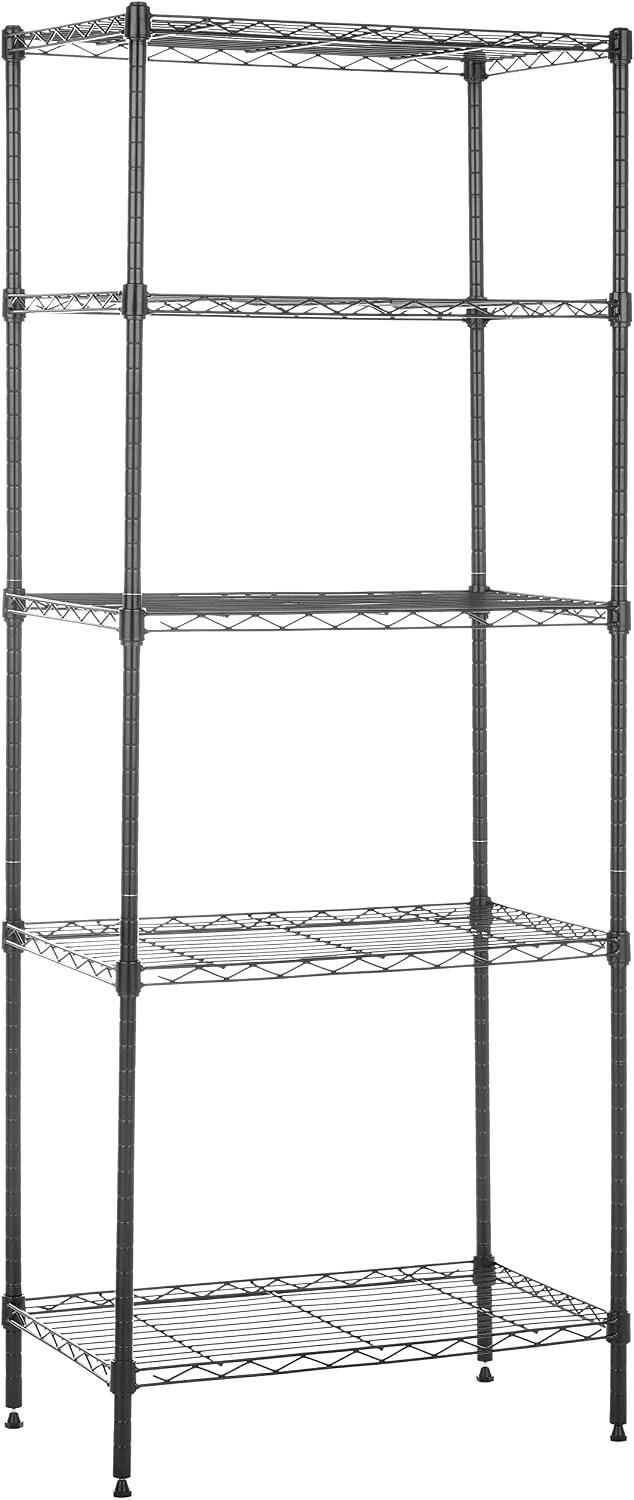
The Cheap Fix Everyone Skips: VELCRO Brand Easy Hang Straps
Every garage I've walked into has the same nest in the corner: a couple of extension cords and a garden hose, tangled into something that takes five minutes to untangle and thirty seconds to re-tangle. This variety pack solves that for less than the cost of the hardware you'd use to build a hanger.
Wrap the cord, hang the strap on a rail hook or a nail, done. No studs, no anchors, no install, no thinking. It's the accessory that makes a wall track system worth having, because it takes the stuff with no good shape and gives it a home at eye level where you'll grab it.
Be clear about what this is: cord and hose management, not a load-bearing product. Don't hang a ladder from it. Use it for what it's for and it will outlast the cords.
The Full Build: 12-Pack Garage Storage Cabinet System with Workbench and Pegboard
If you're past the point of wanting to look at your stuff, this is the direction. Twelve pieces, a workbench, and pegboard. Cabinets beat open shelving for anything you don't want covered in sawdust, and that list is longer than most people think. Paint, power tools, chemicals, anything with a cord you'd rather keep clean.
This is also the only product in this group that needs a plan before you order. A twelve-piece run is a layout decision, not a purchase. Measure the wall, mark your studs, and sketch the run on paper first. Cabinet doors need swing room. The workbench needs to sit where you'll actually work, which usually means under the light and away from the door you park through. Pegboard goes above the bench at arm's reach, not above the cabinets where it turns into decoration.
Anchor the workbench to the wall. A freestanding bench walks across the floor every time you push a board across it, and you'll blame the bench instead of the missing anchor. Shim the cabinets level before you load them, because doors that don't close square will drive you crazy for years.
How I judge garage storage
Not with a box of Christmas lights. A shelf that holds a box of lights proves nothing about a shelf.
My test loads are the ones a garage actually carries: a full tool chest, two bikes, lawn equipment, and the seventeen boxes my wife keeps asking me to deal with. If a system can't handle those without flexing, it's furniture, not storage.
Then four questions. What are the brackets made of? Steel beats plastic, always. Does the mounting hardware match the weight rating? The box lies, the bracket doesn't. Can I reconfigure it later? Static systems are just shelves. And would I trust it with my tools? That's the whole test.
What the specs actually tell you
Weight ratings are printed on the box, not on the bracket. That's the single biggest gap between what you read and what you get. A rail rated for a number of pounds doesn't care what the rail can hold. It cares what the fasteners can hold, and what's behind the drywall.
Plastic track has a place. It's affordable, it installs fast, and for bikes, hoses, and long-handle tools it's plenty. Steel track is for people who want to hang heavy things and stop thinking about it. Know which one you're buying before you drill.
Freestanding shelving sidesteps the stud problem entirely, which is why it delivers the most real capacity for the least money in this group. It just trades a wall problem for a floor problem: pitch, shims, and load distribution.
Cabinets are a different animal. They're dead load, they're semi-permanent, and they hide everything, which is either the whole point or a way to forget what you own. Both are valid reasons to buy them.
The garage storage reference table
| Product | What it is | Mounting | Best for |
|---|---|---|---|
 Visit on Amazon → Visit on Amazon →Rubbermaid FastTrack 15-Piece Kit |
Wall track kit, 4 rails and 11 hooks | Stud-mounted rails | Bikes, ladders, hoses, long-handle tools |
 Visit on Amazon → Visit on Amazon →Amazon Basics 5-Shelf Shelving Unit |
Freestanding steel shelving, 5 adjustable shelves | Floor | Bins, bulk goods, seasonal boxes |
 Visit on Amazon → Visit on Amazon →VELCRO Easy Hang Straps |
Cord and hose wraps, variety pack | Hangs from a hook or rail | Extension cords, garden hoses |
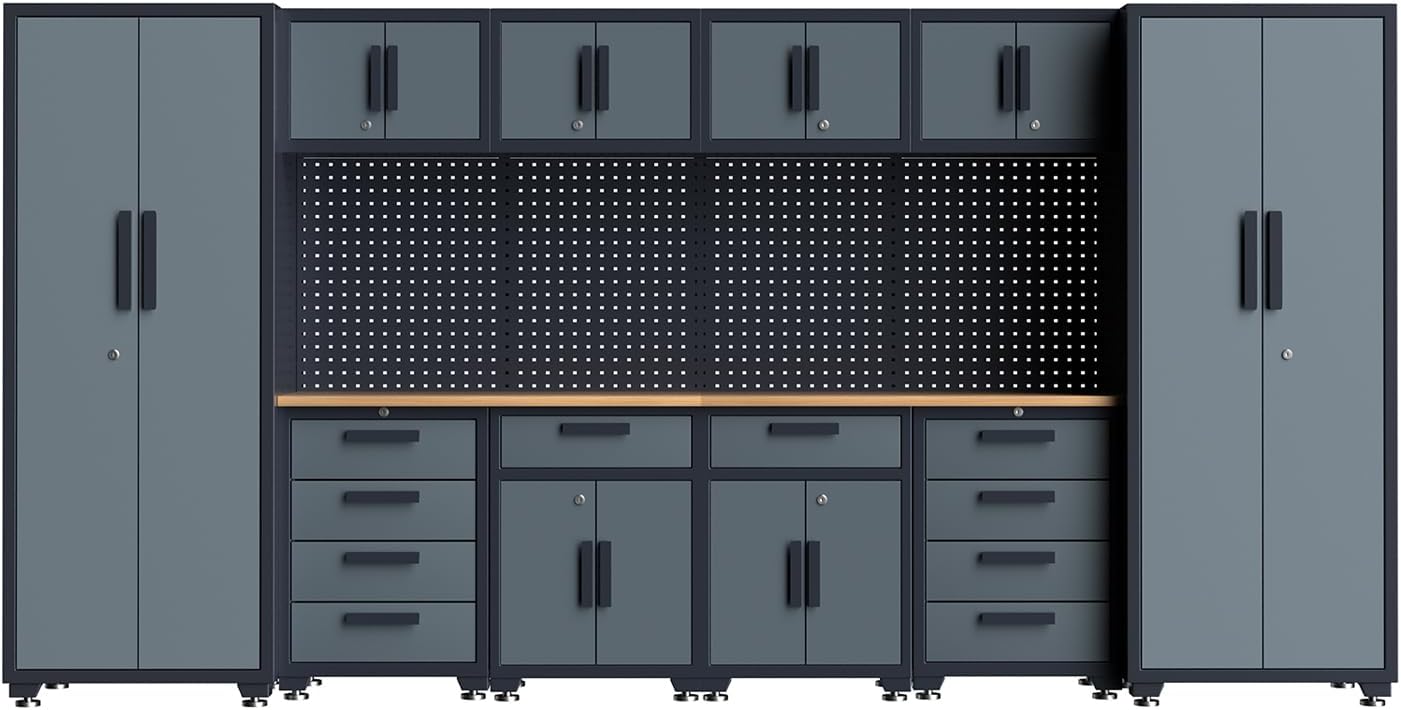 Visit on Amazon → Visit on Amazon →12-Pack Cabinet System |
Cabinets, workbench, pegboard | Floor and wall | Full shop buildout |
What about overhead racks?
Overhead storage is free real estate until the ceiling sags. I won't tell you to buy a ceiling rack without knowing what's above it. Garage ceilings are often drywalled over joists, and the hardware in the box is frequently meant for a wall, not a ceiling carrying dead load forever. Verify the joists, use hardware rated for the load, and check it with a level after thirty days. If you can't verify the structure, don't hang your lumber from it.
Should you buy the Rubbermaid FastTrack 15-Piece Kit?
Yes, for most garages. It's the value pick here, it installs in an afternoon, and the hooks move when your stuff changes. Keep the heavy items low, use lag bolts into studs, and it will do everything a homeowner needs. I have one in my own garage and I'd buy it again.
Should you buy the Amazon Basics 5-Shelf Shelving Unit?
Yes, if you have bins and bulk and you don't want to think about studs. It's the most capacity for the least money in this group, the height is usable, and the depth doesn't eat your parking space. Shim the front legs for the floor pitch and spread the load across each shelf.
Should you buy the VELCRO Easy Hang Straps?
Yes. It's the cheapest fix in this article and it solves the problem every garage has. Just don't ask it to hold a ladder.
Should you buy the 12-Pack Garage Storage Cabinet System?
Only if you're ready to plan a layout. If you want doors, a bench, and a place to hide the sawdust, this is the endgame for a garage. If you'd rather keep things flexible, the wall track and the freestanding rack will get you most of the way with a lot less commitment.